
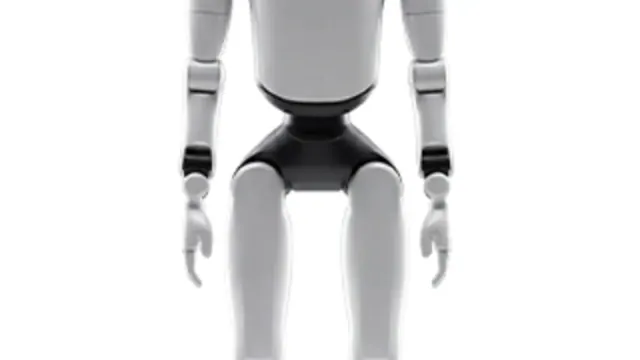
At the World Artificial Intelligence Conference (WAIC) 2026 in Shanghai, AGIBOT introduced four hardware systems targeting separate operational settings: the A3 Ultra full-size humanoid, the X2 Edu research platform, the G2 Max heavy-payload task robot, and the OmniHand 3 Ultra-M direct-drive dexterous hand. The releases segment full-body commercial assistance, modular lab prototyping, factory transport, and contact-rich manipulation into distinct mechanical architectures.
Product Specifications and Roles
The following specifications and operating figures are reported by AGIBOT.
| Product | Form factor | Intended application | Key specifications |
|---|---|---|---|
A3 Ultra | Full-size humanoid (1.74 m, 60 kg) | Commercial and public service | 51 active DoF; 5 kg payload per arm; up to 8 hours combined operating time; onboard NVIDIA Thor; LiDAR, vision, and RTK/UWB positioning |
X2 Edu | Compact humanoid (~1.3 m) | Education, competitions, and scientific research | 29 DoF (7 DoF per arm); up to 3 kg end-effector payload; modular reconfigurable hardware; open control and hardware interfaces |
G2 Max | Wheeled task robot | Material handling and palletizing | Force-controlled arms; adjustable working height; omnidirectional wheeled mobility; autonomous docking and swappable battery |
OmniHand 3 Ultra-M | Direct-drive dexterous hand (630 g) | AI training, teleoperation, and contact manipulation | 20 active DoF; 5 kg grip load; 0.3 s open/close cycle; ±0.2 mm repeatability; palm tactile array and vision-based fingertip sensors |
Architecture and Sensing Details
The A3 Ultra targets extended shifts in public venues. AGIBOT pairs NVIDIA Thor compute with a sensor suite comprising 3D LiDAR, RGB-D cameras, fisheye lenses, and binocular vision, alongside GPS, RTK, and UWB positioning. Power options include direct cable charging, battery replacement, and autonomous docking.
The X2 Edu emphasizes secondary development. Its modular body permits full-chain disassembly, enabling researchers to attach custom sensors, computing modules, and end effectors through open motion-control interfaces.
For manufacturing floors, the G2 Max uses an omnidirectional wheeled base instead of legs and force-controlled arms designed to operate beside existing production equipment. In parallel, the 630-gram OmniHand 3 Ultra-M uses a direct-drive design with palm tactile arrays and optical fingertip sensors to govern responsive gripping.
Availability and Operational Limits
AGIBOT paired the announcement with reported metrics from partner facilities. At a Longcheer Technology plant in Nanchang, the company stated that earlier G2 robots were integrated into a tablet inspection line within 36 hours, handling roughly 3,000 units per shift across 64 cumulative operating hours with under 4% downtime. The vendor also presented live WAIC demonstrations, including table tennis tracking, teleoperated boxing, and a multi-step beverage service routine, while deploying over 60 units across conference venues for visitor assistance.
However, the announcement did not disclose unit pricing, customer delivery schedules, or commercial availability dates for any of the four new products. The referenced factory performance reflects vendor-reported figures from a single partner site rather than independent third-party benchmarks, and staged conference demonstrations do not establish long-term reliability in unconstrained production environments.