
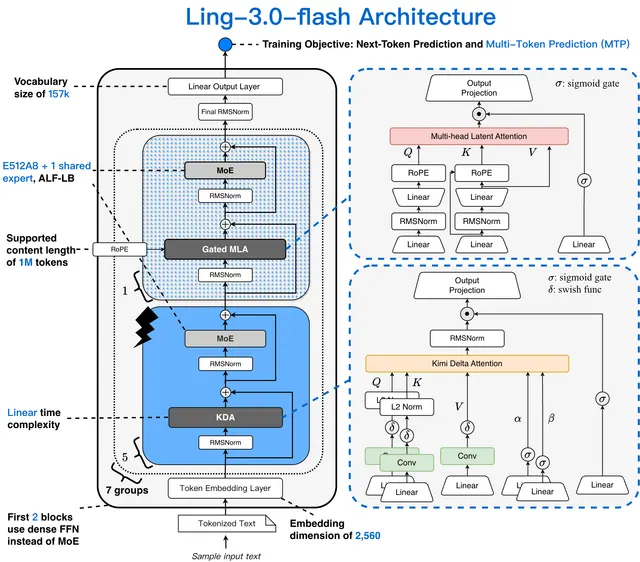
Ling 3.0 Flash Fin can retrieve, reason and edit spreadsheets. Its real test is whether a human can trace every number after the model is done.
01 · Tech News
Follow the AI industry.
189 reports following 66 companies and partnerships from model release to physical deployment.
All Tech News
Browse every report, including the current lead.
189 articles · By source / event date · Page 6 of 10

NVIDIA’s first Vera Rubin NVL72 MLPerf preview reports up to 3.7x the throughput of GB300 NVL72 on Qwen3-VL and up to 2.5x on DeepSeek-R1, under specific closed-division configurations.
OpenAI has introduced a company-run system to investigate and publish individual examples of model misalignment across training, evaluation and deployment. The company says the initiative creates formal disclosure lanes, but remains an evolving proposal whose six initial cases do not measure how frequently these failures occur.

Anthropic has added prebuilt operational workflows across all paid Claude plans, though execution remains bounded by default approval gates, existing app permissions, and plan-specific data rules.
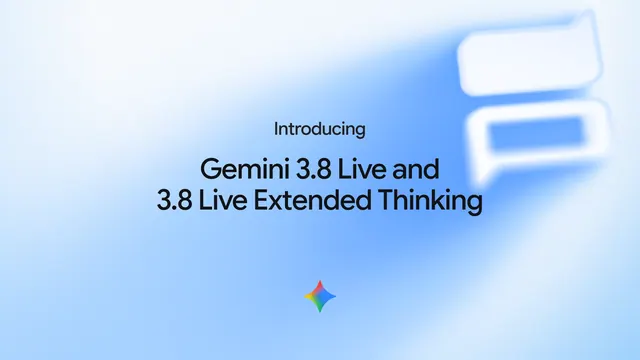
Google has released two Gemini 3 Pro–based voice models designed for real-time interaction and background reasoning, with different distribution lists across the Gemini API, Google Cloud, consumer products and Workspace.
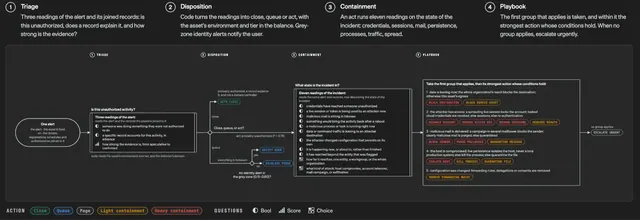
TypeSafe’s new model refuses to write. That limitation may make it useful inside software—but a typed answer can still be confidently wrong.
Anthropic has released Claude for Financial Advisors, a plugin that connects Claude to financial-data systems for meeting preparation, follow-up drafting and other administrative work while leaving advice and execution with human professionals.
Superhuman’s acquisition of Fathom is not an admission that transcription models are hard to wrap. It is a calculated bet that downstream agents cannot act safely without the conversational record where intent turns into an obligation.
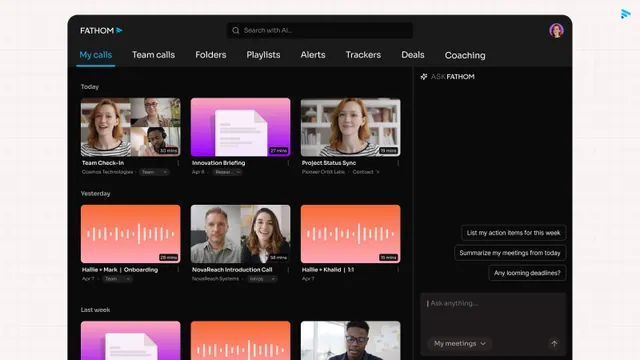
Superhuman has acquired AI meeting partner Fathom to connect recorded conversations with its email, document, and agent workflows. The transaction expands Superhuman's product footprint, though the unified agent workflows described by the companies remain planned integrations rather than available features.

Amodei’s September 12 essay separates Anthropic’s own oversight pledge from proposals requiring industry and government cooperation. The planned access would cover development processes as well as finished models.

The reported return of selected managers inside Meta’s Applied AI group is not proof that flattening failed. It is a reminder that making more work, faster, creates an integration problem of its own.
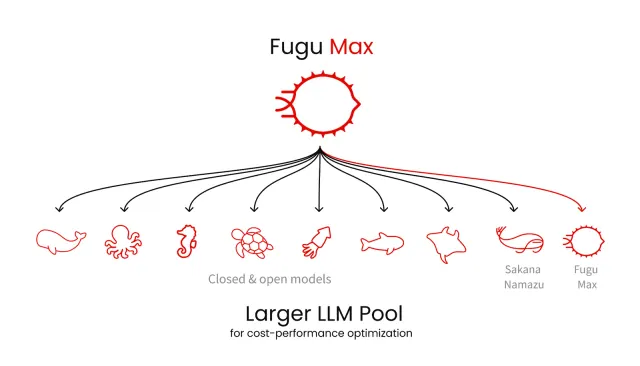
Max targets cost efficiency and Ultra v2 targets complex work. Both use fixed model pools, and the service is unavailable in the EU and EEA.

Astra is not generating the movie. It is making the rough 3D scene that gives a video model less room to forget where everything is.

The September report describes selected cyber, surveillance, influence and fraud operations alongside dual-use biological research. Anthropic says the cases show changes in how people use models, not the prevalence of misuse across Claude.
OpenAI's Agents API packages the operational plumbing of autonomous execution into a managed service. But while delegating the loop saves engineering hours, it leaves the boundaries, authorization, and proof of work entirely on the developer's desk.
The release adds native image input and a different memory architecture. Deployers also need to account for its full weight footprint, changed conversation format and reference-runtime limits.
DeepSeek’s compression of active key-value memory attacks a real cost center of long-context agents. But shrinking memory per token does not remove the difficulty of operating its very large composite model.
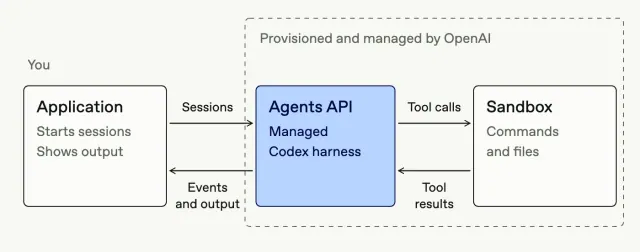
Developers can use OpenAI’s managed agent runtime with hosted or self-hosted sandboxes. Model, tool and container charges still apply, and the service currently lacks zero data retention support.
The September 10 release lets a voice conversation continue while a backend model or agent works. Developers choose that backend separately and retain responsibility for permissions, task state and cancellation.

The September 10 records request examines both the July breach and the decisions surrounding it. It seeks testing records, a detailed timeline and explanations of the access granted to outside investigators.